
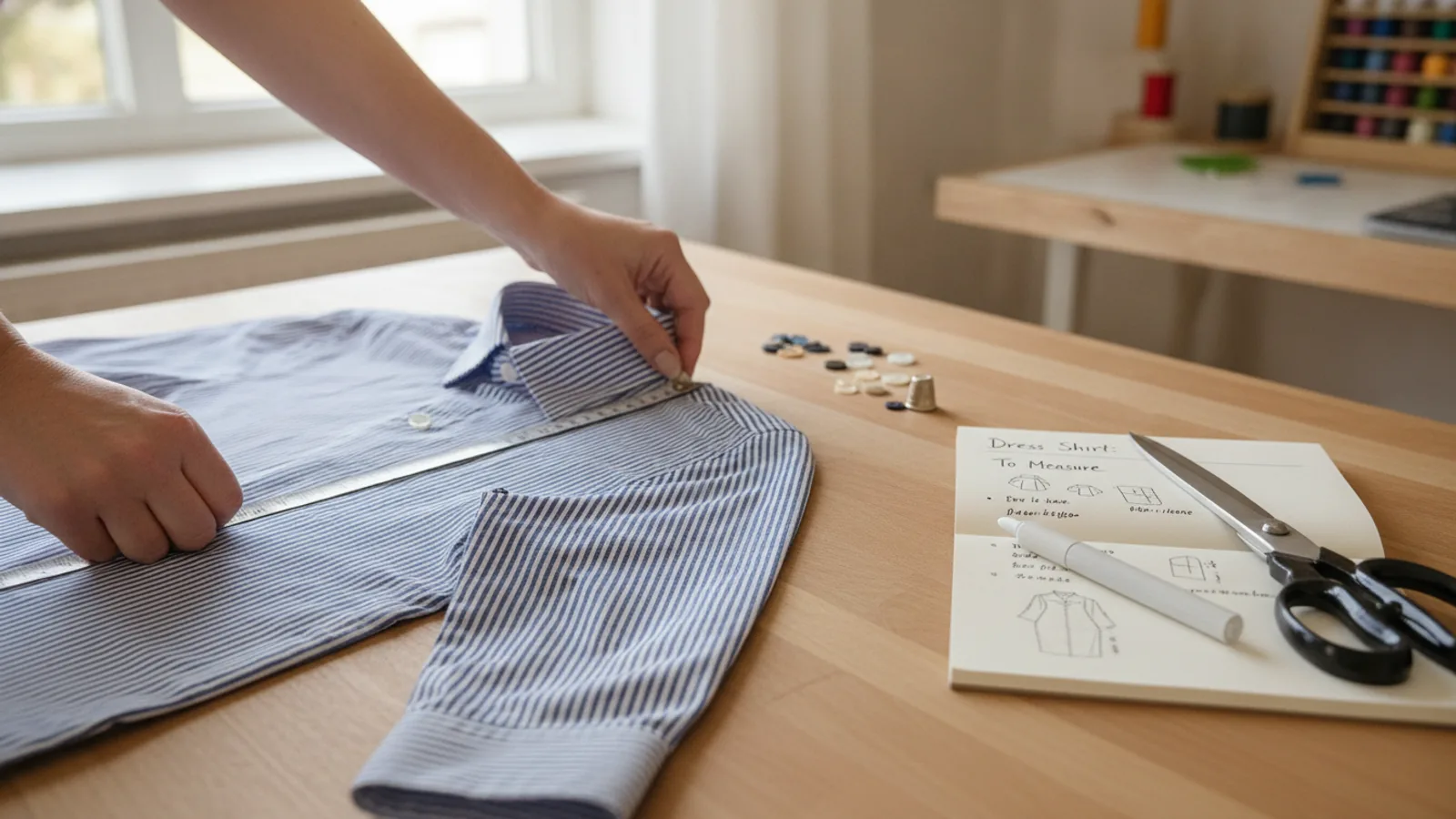
Dress Shirt How To Measure
This guide explains how to approach dress shirt how to measure, including the preparation, practical steps, common mistakes, and final checks that help you finish with confidence.
Before You Start
Gathering a few simple items and understanding the context will make the measuring process smooth and accurate. Don't rush this stage; good preparation is half the battle for achieving that perfect shirt fit.
What You Need
Safety, Timing, or Context Checks
Before you begin, wear a thin t-shirt or be shirtless. Measuring over a thick jumper or hoodie will add extra centimetres and lead to an oversized shirt. Stand up straight but in a relaxed, natural posture. Don't puff out your chest or suck in your stomach.
How to Measure For a Dress Shirt
Follow these steps in order to build a complete and accurate profile of your measurements. Take each measurement twice to ensure consistency; if you get different numbers, take it a third time and use the average.
Quick Reference
Common Problems When You Measure for a Dress Shirt
Even with instructions, small errors can creep in. Here are the most common mistakes and how to avoid them to ensure your measurements are spot-on.
Using the Wrong Kind of Tape Measure
The most frequent error is using a rigid tape measure from a toolbox. This will not bend correctly around your body and will give you inaccurate readings. You must use a soft, flexible tailor's tape for this job.
Pulling the Tape Too Tight
There's a temptation to pull the tape measure as tightly as possible to get the smallest number. This is a mistake. A shirt made to these measurements would be skin-tight and restrictive. The tape should be snug, making full contact with your body, but not digging into your skin or compressing it.
Inconsistent Starting Points
For measurements like sleeve length and shirt length, the starting point is critical. Always start from the centre-back of the neck (that prominent C7 vertebra). Starting from the shoulder seam will result in sleeves that are far too short. Consistency is key.
Measuring Over Bulky Clothing
Measuring yourself while wearing a jumper, hoodie, or even a thick shirt will add inches to your chest and waist measurements, leading you to buy a shirt that's far too large. For the best results, measure shirtless or while wearing a thin, close-fitting t-shirt.
Ignoring Brand-Specific Size Charts
A 'Medium' from one brand can be vastly different from a 'Medium' at another. Your personal measurements are your source of truth. Never buy a shirt based on your usual size letter without first checking your measurements against that specific brand's size guide on their product page.
Advanced Tips for a Perfect Fit
Once you've mastered the basics, these advanced tips can help you refine your choices and understand the nuances of shirt construction.
Measure a Shirt That Already Fits You Well
This is the ultimate hack for online shopping. Take your best-fitting dress shirt, lay it flat on a table, and button it up. Measure it in key areas:
You can now compare these 'garment measurements' directly with the ones provided on retail websites, which is often more reliable than comparing your body measurements.
Understand Shirt Fit Terminology
Brands use various terms to describe the cut of their shirts. Understanding them helps you choose:
Always Account for Shrinkage
Assume that any shirt made from 100% cotton will shrink, typically around 1-3%, after the first few warm washes and tumbles. This can affect the collar size and sleeve length most noticeably. If your measurements are on the borderline between two sizes, it's almost always safer to choose the larger size, especially with cotton shirts.
Dress Shirt How To Measure FAQ
What are the two most important dress shirt measurements?
For most off-the-rack shirts sold in the UK, the collar size and the sleeve length are the two primary measurements used for sizing. You'll often see them listed together, for example, "16 / 34", meaning a 16-inch collar and a 34-inch sleeve.
How do I know if the shirt body will fit if they only list collar and sleeve?
This is where the 'fit' (Regular, Slim, etc.) comes in. Brands design their fits with standard body proportions. A 'Regular' fit shirt with a 16-inch collar will have a much more generous chest and waist than a 'Slim' fit shirt with the same 16-inch collar. This is why you must check the detailed size chart to see the actual garment measurements.
Should I measure in inches or centimetres?
It's wise to record your measurements in both. UK and US brands overwhelmingly use inches. However, many European brands use centimetres. Most flexible tape measures have both scales, so noting down both values will save you from having to do conversions later.
What if my body proportions don't match standard sizes?
This is a common issue. You might have a thick neck but a slim waist, or long arms for your chest size. In this case, your best options are either to find a brand with an 'Athletic' fit that caters to this shape, or to buy a shirt that fits you in the largest areas (e.g., the shoulders and chest) and then take it to a local tailor to have the waist and sleeves taken in. A simple tapering service is usually quite affordable and makes a huge difference.
Final Checklist for Dress Shirt Measuring
Before you click 'buy', run through this quick final checklist to ensure you've covered all the bases for a successful purchase.