
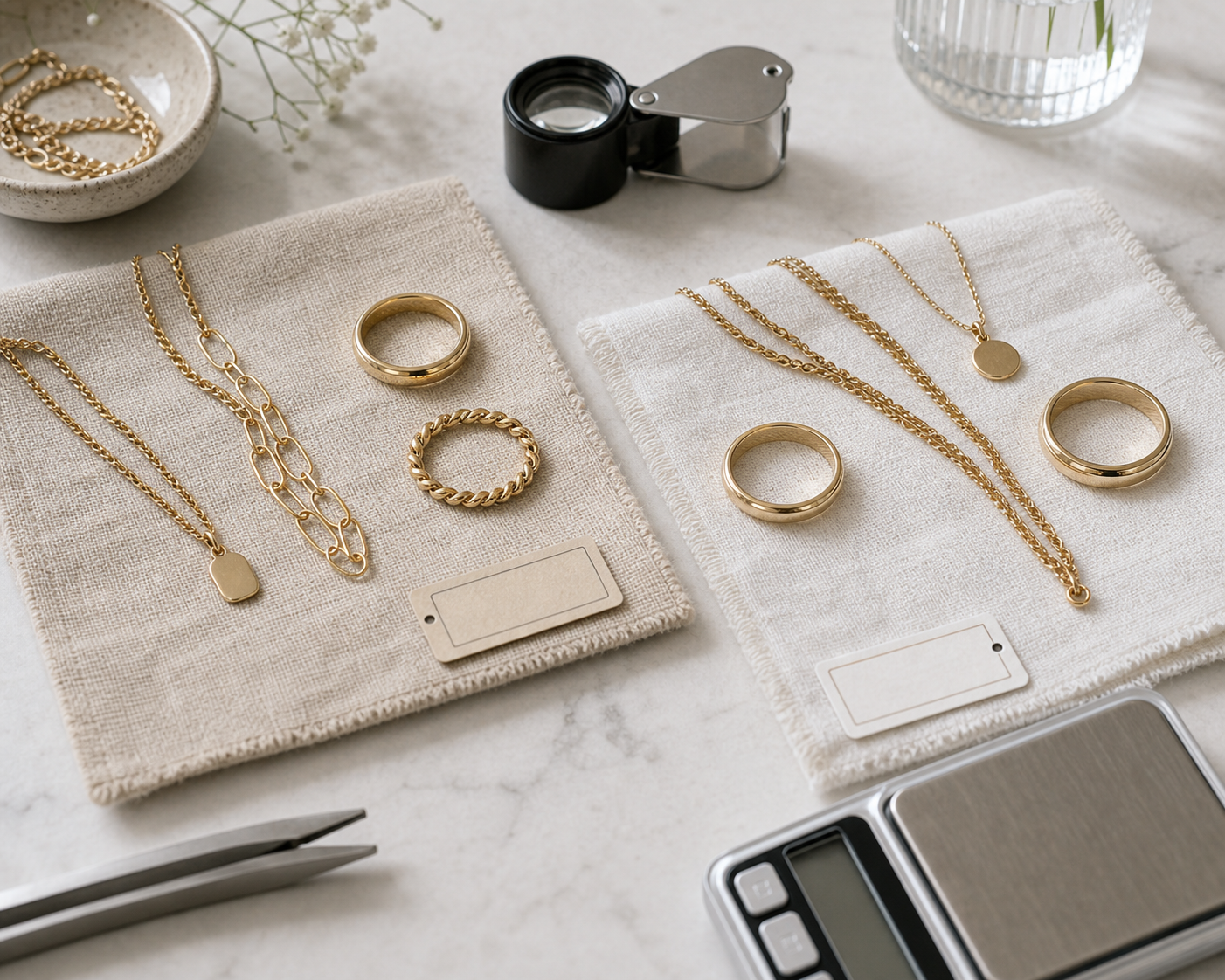
Head-to-head comparison
Overall winner: 14k Gold for its superior blend of durability, appearance, and value.
For most people, 14k gold offers the best all-around package for jewellery that's worn regularly. It's tough, beautiful, and more affordable. 18k gold is the premium choice, best reserved for special occasion pieces where its richer colour and higher purity are the main priority, and its softness is less of a concern.
The Luxury Choice
18k Gold
- Best for fine jewellery
- Richer, deeper colour
- Softer and scratches more easily
The Practical Choice
14k Gold
- Best for everyday wear
- Excellent durability
- More affordable price point
Head-to-Head Scorecard
18k vs 14k Gold: Key Differences
When choosing gold jewellery, the "k" you see stands for karat, a measure of gold purity. The system works on a scale of 24 parts. Pure gold is 24k, meaning all 24 parts are gold. It's incredibly soft, vibrant, and expensive, making it unsuitable for most jewellery.
To create durable and affordable pieces, pure gold is mixed with other metals like copper, silver, nickel, and zinc. These mixtures are called alloys, and the karat number tells you how much pure gold is in the mix.
- 18k Gold: This is 18 parts gold and 6 parts alloy metals. That makes it 75% pure gold (18 divided by 24). This high purity gives it a rich, deep yellow colour that many associate with luxury.
- 14k Gold: This is 14 parts gold and 10 parts alloy metals, making it 58.3% pure gold (14 divided by 24). The higher proportion of alloys makes it stronger and more durable than 18k gold, though its colour is slightly less saturated.
This fundamental difference in composition-75% gold vs 58.3% gold-is the source of all the trade-offs between the two. It directly impacts durability, colour, price, and even how suitable it is for sensitive skin. Understanding this simple ratio is the key to deciding which is the right choice for your lifestyle and budget.
Measurement Winners for 18k vs 14k gold
Measurement
Routine fit winner
The suitability of gold for everyday wear comes down to one thing: hardness. Jewellery, especially rings and bracelets, takes a surprising amount of abuse. It gets knocked against desks, scraped against walls, and caught on clothing. The metal needs to be strong enough to resist scratching, denting, and bending.
This is where the alloy content plays a crucial role. The additional metals mixed with pure gold aren't just for cost-saving; they add significant strength. 14k gold, with its 41.7% alloy content, is substantially harder and more durable than 18k gold, which contains only 25% alloys. This added resilience makes 14k gold the clear favourite for pieces intended for daily wear, such as engagement rings, wedding bands, and everyday bracelets. It holds its shape better over time and is far more resistant to the minor scratches that accumulate with constant use.
18k gold, being softer due to its higher gold content, is more prone to damage. It can scratch and dent more easily, making it a less practical choice for an active lifestyle or for rings that will be worn constantly. It is better suited for special occasion pieces or items that are naturally more protected from impact, like earrings and pendants.
Measurement
Formula or feature winner
When it comes to the sheer luxury and appearance of gold, purity is the defining feature. The colour of gold jewellery is a direct result of how much pure gold is in the alloy. Pure 24k gold has an intense, almost orange-yellow lustre that is unmistakable.
18k gold, at 75% purity, retains much of this rich, vibrant character. It has a deep, warm, and saturated yellow hue that looks luxurious and is often considered the benchmark for fine jewellery. When you picture classic, high-end gold, you are most likely picturing 18k. The difference is noticeable, especially when placed side-by-side with a lower-karat alternative.
14k gold, with 58.3% purity, has a beautiful lustre, but it is noticeably paler. The higher concentration of white or red alloy metals lightens the yellow, resulting in a softer, more subtle shade. While many people prefer this less intense colour, especially for modern designs or against certain skin tones, 18k gold wins on the objective measure of gold-like appearance. It is simply closer to the pure element, which is the entire point of buying gold in the first place.
Measurement
Ease of use winner
For many buyers, "ease of use" includes comfort and the ability to wear jewellery without skin irritation. Metal allergies are a common concern, with nickel being the most frequent culprit. While pure gold is hypoallergenic, the alloys mixed in can sometimes cause reactions for those with sensitive skin.
The logic here is simple: the less alloy, the lower the risk. 18k gold is composed of 75% pure gold and only 25% other metals. In contrast, 14k gold contains a much larger proportion of alloys at 41.7%. This means there is a statistically higher chance that a 14k piece contains enough of an allergenic metal like nickel to trigger a reaction. While many modern jewellers use nickel-free alloys, it's not a universal standard.
For individuals with known metal sensitivities or very sensitive skin, choosing 18k gold is a safer bet. The higher purity significantly reduces the concentration of potential irritants, making it a more comfortable and reliable choice for long-term wear without the risk of developing a rash or discomfort.
Measurement
Value winner
Value for money is a critical factor for nearly every purchase, and jewellery is no exception. The price of a gold item is primarily driven by its gold content. Since gold is a precious metal traded on the open market, more of it means a higher cost.
This is where 14k gold has a massive advantage. Containing significantly less pure gold than 18k (58.3% vs. 75%), it is considerably more affordable. Depending on the design, weight, and retailer, an identical piece of jewellery made in 14k gold can be anywhere from 25% to 50% cheaper than its 18k counterpart. This price difference is substantial and has a real impact on buying decisions.
Opting for 14k gold allows buyers to stretch their budget further. You could afford a larger, more intricate piece, or allocate more of your budget towards the quality of a gemstone in an engagement ring. Given that 14k gold is also more durable, it offers an exceptional blend of quality, appearance, and practicality at a price point that is accessible to a much wider audience. It delivers the timeless appeal of gold without the premium cost of high-purity alloys.
Measurement
Buyer confidence winner
Buyer confidence can be measured in a few ways, but when it comes to precious metals, intrinsic value is a key component. While jewellery should primarily be bought for enjoyment, knowing it holds value provides peace of mind. This value is tied directly to the amount of pure gold the item contains.
18k gold, with its 75% purity, has a significantly higher intrinsic "melt value" than 14k gold. If you were to sell the item for its raw material weight, the 18k piece would command a higher price simply because it contains more gold. This makes it a better choice from a pure asset perspective. It is recognised globally as a standard for fine jewellery and holds its value well among collectors and in secondary markets.
While 14k gold is immensely popular and has a robust resale market for finished jewellery, its value is more tied to design and condition than raw material. For a buyer who sees their jewellery purchase as a wearable asset, the higher gold content of 18k provides greater confidence in its long-term, fundamental worth.
Choose 18k If...
- You prioritise colour and purity above all else. The rich, deep yellow of 18k gold is its main selling point and is visibly more luxurious.
- You have sensitive skin or known metal allergies. The lower alloy content significantly reduces the risk of skin irritation.
- The jewellery is for a special occasion or will be worn with care. It's perfect for earrings, pendants, and rings that won't be subject to heavy daily wear.
- Your budget is flexible. You are comfortable paying a premium for the higher gold content and superior appearance.
- You view the purchase as a long-term store of value. The higher intrinsic gold value provides more confidence as a tangible asset.
Choose 14k Gold If...
- Durability is your main concern. You need a piece that can withstand the rigours of daily life, especially for an engagement or wedding ring.
- You are looking for the best value. It offers an excellent balance of beauty, strength, and affordability.
- You have an active lifestyle. Its resistance to scratches and dents makes it a more practical, worry-free choice.
- You prefer a slightly more subtle gold tone. The lighter hue of 14k gold can be a better match for some skin tones and personal styles.
- You want to maximise your budget. Choosing 14k allows you to afford a larger piece or invest more in high-quality gemstones.
Final Verdict: 18k vs 14k Gold
After a detailed comparison, 14k gold emerges as the overall winner for the majority of buyers in 2026. It strikes an almost perfect balance between the competing demands of durability, aesthetics, and price. For pieces that are meant to be worn and loved every day-like the wedding band you'll wear for decades or the engagement ring that symbolises a promise-the superior strength of 14k gold provides essential peace of mind. Its beautiful, classic gold appearance combined with a more accessible price point makes it the smart, practical, and highly recommended choice.
However, this doesn't make 18k gold obsolete. It remains the undisputed champion of luxury. If your budget allows and your primary goal is to own a piece with the richest possible colour and highest purity, 18k gold is the superior option. It is the ideal choice for fine jewellery that will be worn on special occasions, for heirloom-quality pieces, or for individuals with sensitive skin. The decision ultimately comes down to a personal calculation: weigh the practical needs of your lifestyle against your aesthetic preferences and budget. For daily life, 14k is the reliable workhorse; for pure opulence, 18k is the showstopper.
18k vs 14k Gold: Which Should You Choose? FAQ
Is 18k gold better than 14k gold?
"Better" depends entirely on your priorities. 18k gold is better in terms of purity, colour richness, and intrinsic value. 14k gold is better in terms of durability, scratch resistance, and affordability. For an everyday ring, 14k is often considered the "better" practical choice.
Does 14k gold tarnish or fade?
Pure gold does not tarnish, but the other alloy metals in the gold can react with the environment over time. Both 14k and 18k gold can technically tarnish, though it is very rare with modern alloys and proper care. What people often perceive as fading is usually just a buildup of dirt and oils. A professional cleaning will restore its original lustre. Gold jewellery does not "fade" in colour.
Can you tell the difference between 14k and 18k gold by looking at them?
Yes, but it can be subtle. When placed side-by-side, 18k gold has a noticeably richer, deeper, and more saturated yellow hue. 14k gold is a slightly lighter, softer yellow. A jeweller or a trained eye can spot the difference easily, but a casual observer might not notice unless they are compared directly.
Which is better for an engagement ring, 14k or 18k?
For most people, 14k gold is the better choice for an engagement ring. An engagement ring is worn every day and is exposed to potential damage. The superior hardness and durability of 14k gold make it much more resistant to scratches and bending, ensuring the setting remains secure for years. 18k gold is a beautiful option but requires more care and is better for someone with a less active lifestyle.
Is there a big price difference between 14k and 18k gold?
Yes, the price difference is significant. Because the price is driven by the amount of pure gold, an 18k piece (75% gold) will always be more expensive than the exact same piece made in 14k gold (58.3% gold). You can typically expect an 18k item to cost 25% to 50% more than its 14k equivalent.