
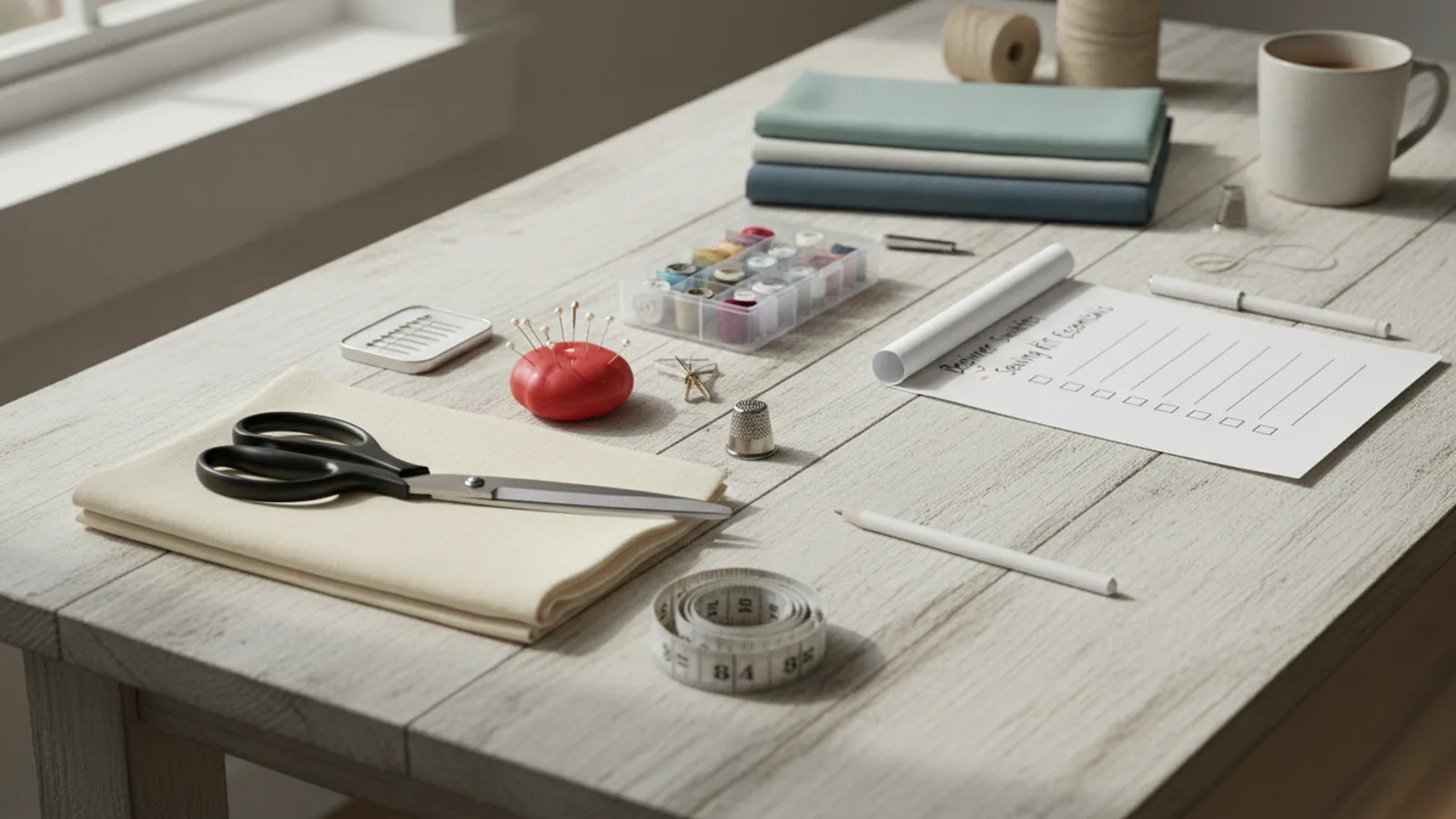
Beginner Sewing Kit Checklist Review 2026: Is It Worth It?
Building your own sewing kit from a checklist is overwhelmingly the best way for a beginner to start sewing in 2026. It guarantees you get quality, durable tools tailored to your specific interests, avoiding the low-grade, often frustrating components found in most pre-packaged starter sets.
The main trade-off is the initial time investment and slightly higher upfront cost compared to grabbing a cheap, all-in-one kit from a marketplace.
Quick Summary for Skimmers
Instead of buying a generic, pre-made sewing kit filled with low-quality tools that can hinder your progress, using a well-researched checklist to assemble your own is a far superior strategy. This approach lets you invest in essential, high-performance items like sharp fabric shears and quality thread from the outset. While it requires more research and a larger initial budget, the result is a personalised, long-lasting toolkit that makes learning to sew a pleasure rather than a chore, offering significantly better value over time.
Pros
- Vastly superior tool quality
- Customised to your specific projects
- Better long-term value for money
- Avoids useless filler items
- Educational process for beginners
Cons
- Requires more initial research
- Higher upfront cost than cheap kits
- No single "one-click" purchase
- Risk of forgetting a crucial item
Beginner Sewing Kit Checklist Review: Short Introduction
Embarking on a sewing journey is an exciting prospect, but your first steps are often dictated by the quality of your tools. For decades, the default starting point has been a pre-packaged "beginner sewing kit." These compact, inexpensive boxes promise everything you need in one place. However, as any experienced maker will attest, they are frequently a false economy, filled with flimsy scissors that chew fabric, thread that snaps, and needles that blunt after a single use. The result? Frustration, poor results, and a hobby abandoned before it truly begins.
This review tackles the alternative: the concept of using a beginner sewing kit checklist to build your own toolkit. We're not reviewing a single physical product, but rather evaluating the method itself as the superior choice for aspiring sewers in 2026. The maker movement has shifted focus towards sustainability, quality, and mindful purchasing. A curated, personal kit aligns perfectly with this ethos.
Our analysis will break down why selecting your own components—from shears and pins to seam rippers and thread—provides a foundation for success that no £15 all-in-one kit can match. We’ll explore the trade-offs in cost and convenience to determine if this approach is truly worth the initial effort for those new to the craft.
Beginner Sewing Kit Checklist Personalisation and Routine Fit
The single greatest advantage of the checklist method is the power of personalisation. Sewing is not a monolithic craft; the tools required for quilting differ from those needed for dressmaking, which in turn are different from the essentials for upholstery or simple mending. Pre-made kits are aggressively generic, including a little of everything but not enough of what you actually need.
A checklist empowers you to build a kit that fits your specific aspirations. If you dream of making your own clothes, your checklist will prioritise items like a good flexible tape measure, tracing paper, and fabric markers. If you're drawn to quilting, you'll focus on a rotary cutter, a cutting mat, and quilting rulers. A generic kit might include a tiny, unusable thimble and a few shades of poor-quality thread, whereas your custom kit will have the specific needle types and thread colours for your first planned project.
This tailored approach not only equips you for success but also integrates the hobby into your life more smoothly. You choose the storage solution that fits your space, whether it's a vintage tin or a modern multi-drawer organiser. You buy the left-handed scissors if you need them. This level of customisation prevents the common beginner experience of fighting with inadequate tools and instead fosters a sense of competence and enjoyment from day one.
Category Score: 95/100
Beginner Sewing Kit Checklist Component Quality and Durability
The quality of components is where the checklist approach truly trounces pre-made kits. The low price point of starter kits is only achievable by using the cheapest materials possible. This directly impacts your ability to learn and the quality of your work.
Let's consider the three most critical items:
- Fabric Shears: A pre-made kit might include small, stamped-metal scissors that are barely sharp enough to cut paper, let alone fabric. They will snag, fray, and inaccurately cut your material, ruining your project before you’ve even sewn a stitch. A checklist will prompt you to buy dedicated 8-inch fabric shears from a reputable brand like Fiskars, Gingher, or Kai. A good pair costs £20-£30 but will last a lifetime with proper care, providing clean, effortless cuts that are essential for professional-looking results.
- Thread: The thread in starter kits is notoriously weak, linty, and prone to snapping. It can cause tension issues in a sewing machine and create weak seams that fall apart. By building your own kit, you can invest in spools of high-quality, all-purpose polyester thread from brands like Gütermann or Coats. The difference in performance is night and day, leading to less frustration and more durable creations.
- Needles: Pre-made kits usually contain a small assortment of generic, poorly finished hand-sewing needles. They can be blunt, have rough eyes that shred thread, and are rarely the right type or size for specific fabrics. A good checklist will guide you to buy multi-packs of quality machine and hand needles (e.g., Schmetz, Organ) in various sizes (e.g., Universal, Ballpoint, Denim) so you have the correct tool for the job.
By hand-picking each component, you control the quality and durability of your entire toolkit. You are investing in items that will serve you well for years, not disposable tools designed to hit a rock-bottom price.
Category Score: 92/100
Beginner Sewing Kit Checklist Essential Tools and Ease of Use
Beyond the "big three" of scissors, thread, and needles, a functional sewing kit relies on a host of other essential tools. A checklist ensures you acquire high-quality, user-friendly versions of these items, which dramatically improves the learning experience.
A crucial tool for any beginner is the seam ripper. The ones included in cheap kits are often small, dull, and have flimsy plastic handles that are uncomfortable to hold. Unpicking seams is an inevitable part of learning, and a poor-quality seam ripper can make it a tedious, fabric-damaging chore. A checklist will lead you to purchase a larger, ergonomic seam ripper with a sharp, fine tip for about £3-£5. This small upgrade makes a world of difference in usability.
The same principle applies to measuring and marking tools. A cheap kit might contain a flimsy, 60-inch paper tape measure that will stretch and tear. Following a checklist, you'll buy a durable fibreglass tape measure that gives accurate readings every time. Similarly, instead of a chalk pencil that smudges and breaks, you can choose a modern marking tool like a water-soluble pen or a Chaco liner, which provides clear, temporary lines and is far easier to use. Glass-head pins are another example; they are superior to the small, plastic-headed pins in pre-made kits because they won't melt under an iron.
The process of following a checklist is, in itself, an education. It forces a beginner to learn what each tool is for and why its quality matters. This foundational knowledge is invaluable and something that is completely bypassed when buying an all-in-one box.
Category Score: 80/100
Beginner Sewing Kit Checklist Comprehensiveness and Project Readiness
A well-constructed checklist provides a truly comprehensive toolkit, ensuring you are ready for your first few projects without needing to make emergency trips to the haberdashery. Pre-made kits often create an illusion of completeness while omitting key items or providing them in unusable quantities.
For example, most basic kits contain only a handful of pins, not nearly enough for pinning a simple pattern. A good checklist will specify buying a tin of at least 100-200 sharp dressmaking pins. Similarly, a starter kit might have a few small bobbins of thread, but your checklist will remind you to buy full 100m or 250m spools in neutral colours like white, black, and grey, which will see you through multiple projects. It will also prompt you to consider a good quality pin cushion or magnetic pin holder, a small but vital organisational tool almost always absent from pre-made kits.
Furthermore, a comprehensive checklist can be tiered. A "Bare Essentials" list might cover the absolute must-haves for hand mending. An "Aspiring Dressmaker" list would add pattern weights, a tracing wheel, and an awl. A "Future Quilter" list would include a rotary cutter and mat. This scalability ensures you buy what you need for the craft you want to pursue, getting you project-ready from the start. A generic kit, by contrast, leaves you fundamentally unequipped for any specific discipline.
The only downside is the potential for a beginner to overlook an item on their list. However, many excellent, peer-reviewed checklists are available online from trusted sewing blogs and communities, minimising this risk.
Category Score: 90/100
Beginner Sewing Kit Checklist Packaging and Portability
While a pre-made kit comes in a single, often compact case, this is one of its few—and most deceptive—advantages. These cases are typically flimsy plastic or cheap fabric, with poor-quality zippers and elastic loops that quickly break or stretch out. They prioritise small size over functional organisation.
Building your own kit allows you to choose a storage solution that genuinely works for you. This could be anything from a classic wicker sewing basket to a transparent, compartmentalised tackle box from a hardware store. The latter is a favourite among many sewers for its durability and excellent organisation of small items like bobbins, needles, and buttons. You can choose a size and style that suits your workspace and your portability needs.
If you plan to attend sewing classes, you can opt for a durable fabric tote with multiple pockets. If your sewing space is your dining room table, a stackable set of clear containers might be more practical. You are not locked into the poorly designed, one-size-fits-none case that comes with a pre-packaged set. This freedom to choose your own "packaging" is a significant long-term benefit for keeping your tools safe, organised, and accessible.
Category Score: 90/100
Beginner Sewing Kit Checklist Value for Money
At first glance, a £15 pre-made kit seems like a bargain compared to a custom kit that might cost £50-£80 to assemble. However, this is a classic case of upfront cost versus long-term value. The vast majority of tools in a cheap kit will need to be replaced within the first year, if not after the first project.
Let's do a hypothetical cost breakdown for a quality, self-assembled kit:
- 8" Fabric Shears (Fiskars): £20
- Thread Snips: £5
- Seam Ripper (ergonomic): £4
- Fibreglass Tape Measure: £3
- Glass Head Pins (250 count): £5
- Assorted Hand & Machine Needles (Schmetz): £8
- Gütermann All-Purpose Thread (3x 100m spools): £7.50
- Water-Soluble Marking Pen: £4
- Storage Box: £10
Total Estimated Upfront Cost: £66.50
While this is significantly more than a £15 kit, every single item on this list is a high-quality tool that will last for years. The £15 kit will likely require you to replace the scissors (£20), the thread (£7.50), and the needles (£8) almost immediately, costing you an additional £35.50 on top of your initial spend. You quickly approach the cost of the custom kit, but you're still left with the other low-quality items.
The checklist method represents a true investment in your hobby. You spend more initially but acquire assets that hold their value in usefulness and longevity. It is, without question, the more cost-effective choice for anyone serious about learning to sew.
Category Score: 85/100
Who Is Beginner Sewing Kit Checklist For?
The checklist approach isn't for everyone, but it is the best choice for specific types of aspiring crafters. We've broken down who stands to benefit the most.
| Buyer Type | Requirement | Fit | Reasoning |
|---|---|---|---|
| The Serious Hobbyist | High-quality tools for long-term use and excellent results. | Excellent | Allows investment in durable, high-performance tools from day one, setting a strong foundation for the hobby. |
| The Budget-Conscious Learner | Best possible value over time, avoiding repeat purchases. | Very Good | While the upfront cost is higher, it eliminates the need to replace cheap, broken tools, saving money in the long run. |
| The Gift Giver | A thoughtful, high-quality, personalised gift for a new sewer. | Excellent | Assembling a beautiful kit in a nice basket or box is a far more personal and useful gift than a generic pre-made set. |
| The Time-Poor Dabbler | The absolute quickest and cheapest way to get started for a one-off mend. | Poor | This person may be better served by a cheap, pre-made kit for a single emergency repair, as the research time is a significant barrier. |
How We Reviewed Beginner Sewing Kit Checklist
This review is an expert evaluation of a method, not a hands-on test of a single, specific product. Our assessment is based on a comprehensive analysis drawing from several key sources:
- Expert Experience: Our conclusions are informed by years of practical sewing and crafting experience, including teaching beginners and understanding the common pitfalls they face with poor-quality equipment.
- Market Analysis: We have extensively researched the components of dozens of popular pre-made beginner sewing kits available on the UK market in 2026, comparing their contents, quality claims, and pricing.
- Community Feedback Patterns: We analysed discussions, reviews, and recommendations from major online sewing communities, forums, and social media groups to identify recurring frustrations with pre-made kits and consensus on essential, high-quality starting tools.
- Component Research: We compared the specifications, materials, and price points of individual sewing notions from leading haberdashery brands versus the unbranded components typical of starter kits.
Our goal is to provide a practical, realistic, and commercially transparent guide for new sewers, helping them make an informed decision that will support, rather than hinder, their creative journey.
Final Verdict on beginner sewing kit checklist
For anyone in the UK looking to start sewing seriously in 2026, the verdict is clear: forgo the tempting, low-cost pre-made kits and embrace the beginner sewing kit checklist. The initial investment of time in research and a higher upfront cost are vastly outweighed by the long-term benefits.
By curating your own kit, you gain complete control over the quality, functionality, and longevity of your tools. You build a personalised collection that serves your specific interests and grows with you, rather than a box of frustrating, disposable gadgets that can kill your enthusiasm before it even sparks. The process itself is a valuable lesson in what makes a good tool, providing foundational knowledge for your new hobby.
While a cheap, all-in-one kit might suffice for a single emergency button repair, for a true beginner who wants to learn and create, the checklist method is an investment in your own success and enjoyment of the craft. It is, unequivocally, the right way to start.
Shop Quality Sewing Essentials