
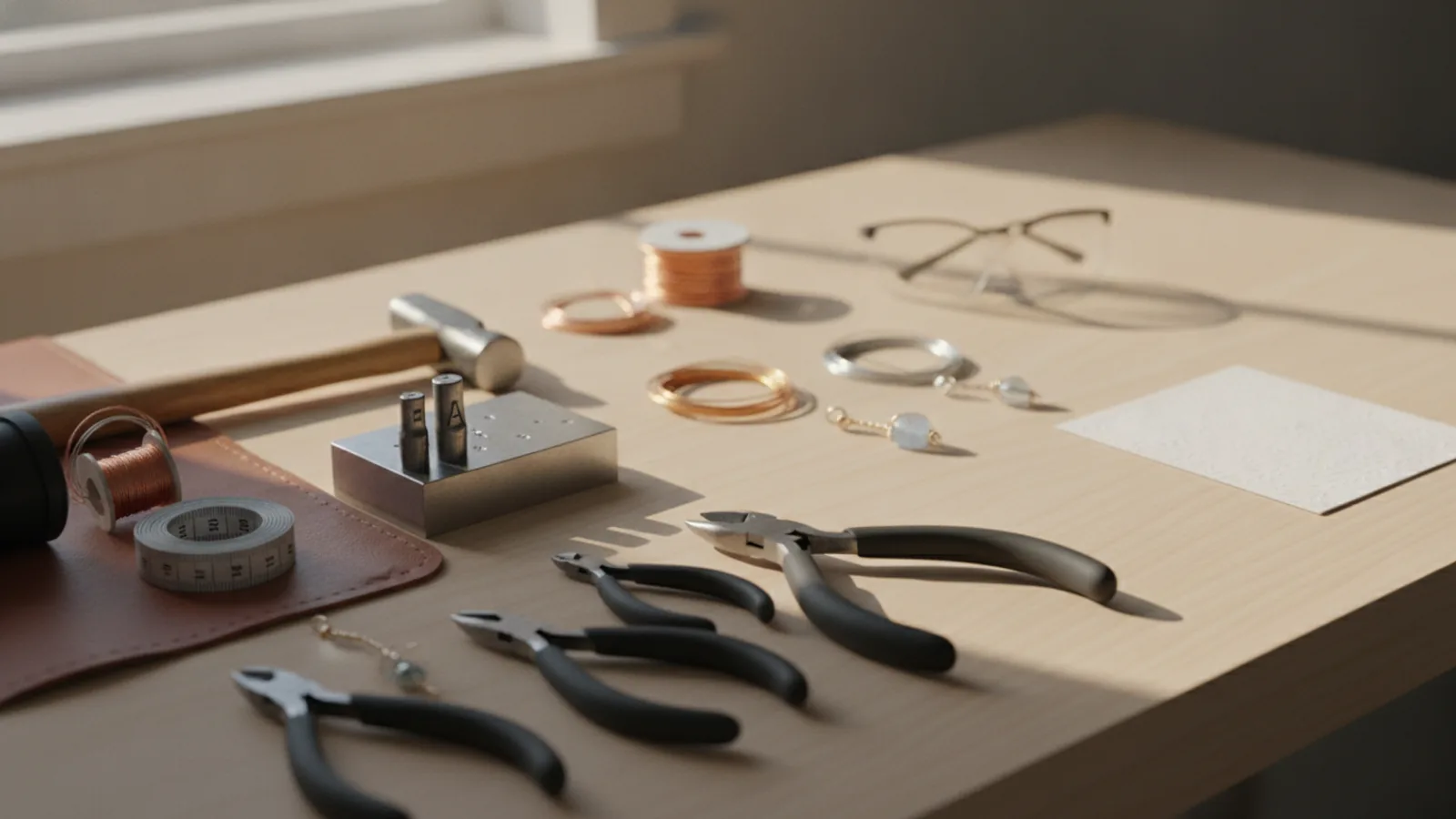
Beginner Jewellery Making Tools Review 2026: Is It Worth It?
This type of all-in-one beginner jewellery making tool kit is an exceptional value proposition for anyone curious about the craft. It provides every essential plier, cutter, and accessory needed to explore techniques from bead stringing to simple wirework without a significant upfront investment.
The primary trade-off is professional-grade durability; these tools are built for learning and light use, not for a production-level workshop environment.
Quick Summary for Skimmers
For the aspiring jewellery maker, a comprehensive beginner's tool kit is the most cost-effective and sensible way to start. For a fraction of the price of buying tools individually, you get a curated set that typically includes multiple types of pliers, wire cutters, tweezers, a storage case, and often a bonus selection of findings like jump rings and clasps. While the steel quality and longevity won't match premium brands, these kits are perfectly suited for mastering the fundamental skills, discovering your preferred techniques, and handling common household jewellery repairs. It's the ideal low-risk entry point before you commit to more specialised, expensive equipment.
Pros
- Incredible value for money
- Comprehensive all-in-one set
- Includes convenient storage case
- Lowers barrier to entry for a new hobby
- Covers multiple beginner techniques
Cons
- Not professional-grade steel
- Included findings are very basic
- Cutters may dull on hard wire
- Grips may be less ergonomic for long sessions
Beginner Jewellery Making Tools Review: Short Introduction
Diving into the world of jewellery making can feel overwhelming, especially when faced with the dizzying array of specialised tools, each with a specific purpose and often a hefty price tag. This is where the beginner jewellery making tool kit comes in. For years, these bundled sets have been the go-to starting point for hobbyists, and in 2026, they represent better value than ever. Typically sold by craft suppliers or on large online marketplaces, these kits consolidate the essential tools into a single, affordable package, removing the guesswork and lowering the financial barrier to entry.
This review focuses on the typical unbranded or house-branded beginner tool kit you'll find widely available online. While specific contents can vary slightly, they generally follow a standard formula: a set of 3-5 core pliers, wire cutters, tweezers, and other handy accessories, all neatly packed in a zippered case. We're evaluating this product *category* on its ability to equip a newcomer with everything they genuinely need to start creating, from simple beaded bracelets to wire-wrapped pendants. The core question we're answering is not whether these tools can compete with premium brands like Lindstrom or Xuron—they can't—but whether they provide a functional, enjoyable, and economically sound foundation for a new creative journey. For the vast majority of aspiring crafters, the answer is a resounding yes.
Personalisation and Routine Fit
One of the greatest strengths of a beginner's tool kit is its versatility and how seamlessly it fits into the exploratory phase of a new craft. It's not a specialised kit for a single technique; it's a generalist's passport to the entire landscape of basic jewellery making. Whether your initial interest lies in the meditative process of bead stringing, the structural art of wire wrapping, or simply the practical skill of repairing a broken necklace, this kit provides the core instruments for the job.
For someone just starting out, a crafting routine hasn't been established yet. This kit facilitates that discovery process. You might find you love the precise, repetitive motion of creating jump rings with round-nose pliers, or that you have a knack for the neat, secure finish of a crimped bead. The kit allows you to try these different avenues without committing hundreds of pounds to tools you might only use once. It encourages experimentation. You can follow along with a wide range of online tutorials for various projects, confident that you have the necessary tools on hand.
Furthermore, it fits the "occasional use" routine perfectly. Many people buy these kits not to launch a new business, but to handle life's small repairs: fixing a child's bracelet, replacing a clasp on a favourite necklace, or shortening a chain. For these tasks, a professional-grade tool is overkill. This kit can live in a craft drawer, ready for action when needed, providing immense practical value far beyond its modest cost. It's a foundational set that adapts to your evolving interests, from casual repairer to dedicated weekend hobbyist.
Category Score: 92/100
Tool Construction and Material Quality
This is the area where a beginner's kit requires the most scrutiny and realistic expectations. The tools are almost universally made from carbon steel rather than the more expensive stainless steel or tool steel found in premium brands. This means they are strong enough for soft craft wires (like copper, brass, and aluminium) but can be susceptible to rust if stored in a damp environment. The finish is typically a simple polish, which can sometimes show machine marks or minor imperfections that don't affect function.
The pliers' joints are usually lap joints, which are functional but can loosen over time compared to the box joints found on higher-end tools. For a beginner, this is rarely an issue. The jaws of the pliers—the most critical part—are generally well-milled and align correctly. You can expect the round-nose pliers to have a smooth, consistent taper and the flat-nose pliers to have a surface that won't excessively mar your wire. However, the precision won't match that of a £50 pair of pliers; you may find the very tips are not perfectly symmetrical, a detail a professional would notice but a beginner would not.
The wire cutters included are typically semi-flush cutters. They will provide a clean enough cut for most beginner work. The key caveat, and a frequent point of failure, is using them on materials they aren't designed for. Attempting to cut hard memory wire or thick gauge steel wire will almost certainly dent or dull the blades. For their intended purpose—cutting soft craft wires up to about 18 gauge (1mm)—they perform admirably. The grips are usually comfortable PVC or a similar plastic, providing adequate cushioning for moderate use.
Category Score: 80/100
Ergonomics and Ease of Use
For a newcomer, intimidation is a major hurdle. A well-designed beginner's kit excels at removing this barrier. The tools are typically smaller and lighter than their heavy-duty professional counterparts, making them easy to handle and manoeuvre, particularly for those with smaller hands. The fundamental designs of round-nose, chain-nose, and flat-nose pliers have been refined over decades, and these kits replicate those proven, intuitive shapes.
The spring-loaded handle design, common in these kits, is a significant ergonomic advantage. The pliers open automatically after you squeeze them closed, reducing hand fatigue during repetitive tasks like opening and closing dozens of jump rings. This feature is a massive quality-of-life improvement and makes the learning process much more comfortable and enjoyable. The PVC grips, while not as luxuriously cushioned as high-end ergonomic handles, provide a secure, non-slip surface that is perfectly adequate for crafting sessions lasting an hour or two.
Perhaps the most significant ease-of-use feature is the kit's all-in-one nature, usually housed in a zippered case. Everything has its place, held by an elastic loop. This organised layout means you're not hunting for the right tool in a jumbled drawer. You can see your entire arsenal at a glance, which helps in learning the names and functions of each tool. This simple organisational aspect cannot be overstated; it fosters good crafting habits from the start and makes the entire experience feel more professional and less chaotic.
Category Score: 95/100
Tool Finish, Wear, and Longevity
The long-term durability of a beginner's tool kit is its most significant compromise, but one that is appropriate for its price and purpose. The carbon steel construction, as mentioned, requires a modicum of care. Wiping the tools down after use and storing them in their case in a dry place will prevent rust and keep them in good working order for years of hobbyist use.
Over time and with regular use, you can expect some wear. The black or coloured PVC grips may become scuffed, but this is purely cosmetic. The plier joints might develop a small amount of "play" or looseness, though this often doesn't impede their function for basic tasks. The most common point of failure is the cutting edges on the wire cutters. If you stick to soft wires, they will remain sharp for a surprisingly long time. If you accidentally try to cut a steel pin or memory wire, you will likely damage them immediately. This is user education, not necessarily a product flaw at this price point.
The surfaces of the plier jaws may also acquire minor nicks and scratches from the wire being worked. Again, this is normal wear and tear. A practical approach is to view this kit as a "learning set." It will serve you well through hundreds of hours of practice and dozens of projects. Eventually, as you identify which tools you use most, you can upgrade them individually. Your flat-nose pliers might last a decade, while you might choose to replace the wire cutters after a year of heavy use. This gradual, informed upgrade path is far more economical than buying a full set of professional tools from the outset.
Category Score: 82/100
Packaging and Portability
The packaging of these kits is one of their most celebrated features. Almost all beginner sets come in a compact, zippered case, often made of durable nylon fabric or faux leather. This case is not just a throwaway part of the packaging; it's a core component of the product's value.
Inside, each tool is secured by its own elastic loop. This keeps the set organised, protects the tool tips and jaws from banging against each other, and makes it immediately obvious if a tool is missing. The case transforms a jumble of tools into a portable workshop. It's small enough to tuck into a tote bag to take to a craft night or a workshop, and it stores neatly on a bookshelf or in a desk drawer, keeping your craft space tidy.
The quality of the cases is generally very good for the price. The zippers are robust enough for regular opening and closing, and the fabric is resilient to scuffs and spills. This portability is a huge plus for anyone with limited dedicated craft space. You can work at the kitchen table and pack everything away securely in under a minute. It's a simple but brilliantly effective solution that adds immense practical value and contributes significantly to the overall positive user experience.
Category Score: 94/100
Value for Money
This is where beginner jewellery making tool kits truly shine and earn their place in every crafter's journey. To put it in perspective, purchasing just one pair of high-quality, European-made pliers can cost more than this entire kit. To buy each tool included in a typical beginner's set individually, even from budget-friendly brands, would likely cost two to three times as much as the bundled kit.
The kit's value proposition is undeniable. It provides a comprehensive set of functional, task-appropriate tools for an exceptionally low price. This democratises the craft, making it accessible to students, retirees, and anyone on a tight budget. The inclusion of bonus items, such as a starter pack of findings (jump rings, clasps, headpins), a bead mat, a caliper, or a ring mandrel, further amplifies the value. While these extras are of basic quality, they are usable and allow a complete beginner to create a finished piece of jewellery straight out of the box without any additional purchases.
You are trading top-tier materials and manufacturing precision for affordability and completeness. For the intended audience, this is an excellent trade. The kit provides 90% of the functionality of a professional set for 10% of the cost. It's an investment in exploring a skill, not a lifetime investment in equipment. From a cost-benefit perspective, there is arguably no better value purchase in the entire world of craft supplies.
Category Score: 90/100
Who Is Beginner Jewellery Making Tools For?
These all-in-one kits are designed with a specific user in mind. While they can be useful for experienced crafters needing a backup or travel set, their primary audience is newcomers. The table below breaks down the ideal user profiles.
| Buyer Type | Core Requirement | Product Fit | Reasoning |
|---|---|---|---|
| The Curious Beginner | A low-cost way to try the hobby | Excellent | Provides everything needed to experiment with multiple techniques without a large financial commitment. |
| The Teen Crafter | A complete, self-contained gift set | Excellent | Affordable, easy to store, and contains all the tools and some supplies to get started immediately on trend-led projects. |
| The Occasional Repairer | Tools for simple household fixes | Good | Contains the right pliers and cutters for replacing clasps, fixing chains, and other common jewellery repairs for a fraction of a jeweller's fee. |
| The Craft Class Attendee | A portable and complete tool set | Excellent | The zippered case makes it easy to transport all the necessary tools to a workshop or class without forgetting anything. |
| The Aspiring Etsy Seller | Tools for a small business | Fair | A great starting point for prototyping, but will need to upgrade key tools (especially cutters and pliers) for production-level work and efficiency. |
How We Reviewed Beginner Jewellery Making Tools
To provide a comprehensive and practical review of this product category, our evaluation is based on extensive market research rather than a hands-on test of a single, specific branded kit. The market for "beginner jewellery making tools" is dominated by dozens of nearly identical sets, often unbranded and sourced from the same overseas manufacturers.
Our methodology involved:
- Product Specification Analysis: We analysed the product descriptions, included tool lists, and material specifications of over 20 top-selling beginner tool kits on major UK marketplaces like Amazon, Etsy, and dedicated craft supply websites.
- Customer Feedback Synthesis: We synthesised several hundred user reviews to identify consistent patterns in praise and criticism. This allowed us to pinpoint common strengths (completeness, value) and weaknesses (cutter durability, finding quality).
- Editorial Category Expertise: Our conclusions are informed by years of hands-on experience in the crafting space. We know what a beginner genuinely needs, what corners can be cut without impeding learning, and when a tool's limitations will start to frustrate a new user.
This approach allows us to review the product concept as a whole, providing advice that is applicable to the vast majority of beginner kits a shopper will encounter in 2026.
Final Verdict on beginner jewellery making tools
For anyone standing at the entrance to the rewarding world of jewellery making, a beginner's all-in-one tool kit is not just a good choice; it's the right choice. It thoughtfully solves the beginner's biggest problem: what do I actually need, and how can I afford it? For a very modest price, you receive a functional, organised, and comprehensive set of tools that will empower you to learn, create, and repair.
The key is to approach the purchase with clear eyes. You are not buying heirloom-quality equipment. You are buying a learner's permit. These tools are designed to get you through the crucial first stages of skill development. They are more than capable of handling the soft wires and basic techniques that form the foundation of the craft. The wear and tear they accumulate is a sign of your own progress. When you eventually wear out the wire cutters or decide you need pliers with more refined tips, you will be making that upgrade as an informed crafter who knows exactly what they need, and why.
Graemeakers can confidently recommend a beginner jewellery tool kit as an outstanding investment. It's a low-risk, high-reward purchase that opens the door to endless creative possibilities. It's the smart, practical, and deal-aware way to begin your journey.
Beginner Jewellery Making Tools Review FAQ
What are the three most essential jewellery making tools for a beginner?
The "big three" essential pliers for nearly all jewellery making are: Round-Nose Pliers (for creating loops and curves), Chain-Nose Pliers (for opening jump rings, gripping small items, and getting into tight spaces), and Wire Cutters (or side cutters, for cutting wire cleanly). A good beginner kit should always include these three at a minimum.
Can I cut memory wire with the cutters in a beginner kit?
No, you should not. Memory wire is made from hardened steel and requires special, heavy-duty memory wire shears. Using the standard flush cutters from a beginner kit on memory wire will almost certainly dent and ruin the cutting blades. Always use the right tool for the material.
How should I care for my new jewellery tools?
Care is simple. The most important thing is to keep them dry to prevent the carbon steel from rusting. Store them in their case when not in use. Wipe them down with a soft cloth occasionally, especially if you live in a humid environment. If a joint feels stiff, a tiny drop of household oil (like 3-in-1) can help.
Are the included findings (jump rings, clasps, etc.) good quality?
The findings included as a "bonus" in these kits are typically very basic. They are usually made from a simple plated base metal. They are perfect for practising techniques and making test pieces, but we would recommend purchasing higher-quality sterling silver, gold-filled, or stainless steel findings for any pieces you plan to sell or give as important gifts.
When will I know it's time to upgrade from my beginner tool kit?
You'll know it's time to upgrade when you feel the tools are limiting you. This could happen in a few ways: a specific tool (like your cutters) wears out from heavy use; you find yourself working on a project that requires more precision than your current pliers offer; or you discover a niche you love (like intricate wire weaving) and want to invest in specialised tools for that specific technique.