
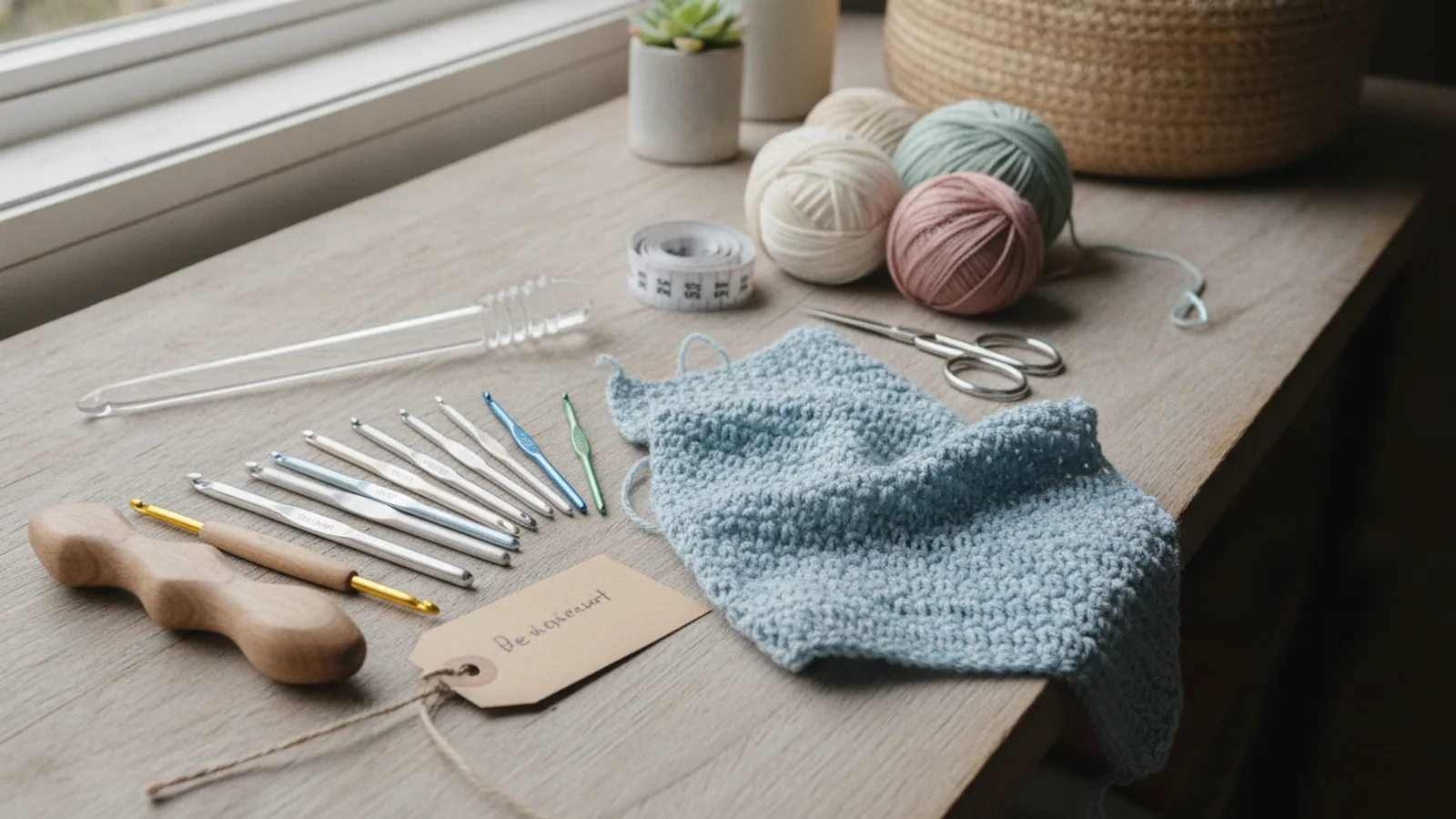
Beginner Crochet Hook Sizes Explained Review 2026: Is It Worth It?
Understanding the crochet hook sizing system is the first, non-negotiable step for any new crafter. While the system itself is essential, its confusing mix of US, UK, and metric standards presents an unnecessary hurdle. Our analysis concludes that focusing solely on the metric (mm) measurement is the most reliable path to success for beginners in 2026.
The primary trade-off is that many popular patterns, especially older or region-specific ones, still use US or UK terminology, requiring a conversion chart until you're familiar with the equivalents.
Quick Summary for Skimmers
Crochet hook sizing seems complex due to three competing systems: US (letters/numbers), UK (numbers), and metric (millimetres). The crucial takeaway for any beginner is to ignore the US and UK systems initially and concentrate on the millimetre (mm) size, which is a universal and precise measurement. For your first project, a 5mm (H-8 in US terms) aluminium hook paired with a Double Knitting (DK) or Worsted weight yarn is the standard recommendation. This combination is manageable, produces visible stitches, and is used in thousands of free beginner patterns. Mastering this one size will build the confidence needed to explore others.
Pros
- The review makes the strongest practical fit for Beginner Crochet Hook Sizes Explained explicit.
- Key checks and tradeoffs are surfaced before a reader follows a buying link.
- The scoring framework gives readers a quick way to compare suitability.
Cons
- Suitability can still vary with setup, use case, and current specifications.
- Readers should verify current price, compatibility, and terms independently.
- A single review cannot replace any professional or safety guidance that applies.
Beginner Crochet Hook Sizes Explained Review: Short Introduction
Stepping into the world of crochet is exciting. You see beautiful blankets, adorable amigurumi toys, and stylish garments, and you think, "I want to make that." You buy some yarn, grab a pattern, and are immediately confronted by a cryptic line: "Requires H-8 (5mm) hook." To a newcomer, this is the first barrier to entry. What is an H-8? Why does it also say 5mm? And why did the hook your grandmother gave you have the number 6 on it, but it looks completely different?
This is the core challenge of understanding crochet hook sizes. It's not one system, but three, all jostling for space on a tiny tool handle and within pattern instructions. There's the US system with its letters and numbers (B-1 to Q, then larger numbers), the old UK/Canadian system with descending numbers (14 to 000), and the beautifully simple metric system, which measures the hook's shaft diameter in millimetres.
This guide is designed to act as a definitive review of this sizing "system" for beginners in 2026. We'll evaluate its logic, practicality, and ease of use, ultimately providing a clear verdict on the best way to approach it. Our goal is to cut through the confusion, help you make smart initial purchases, and ensure your first project is a success, not a frustration. The short answer is to trust the metric measurement above all else; it's the true, universal size.
Understanding the Sizing Systems: Metric, US, and UK
The primary reason crochet hook sizing feels intimidating is the lack of a single, global standard that has been universally adopted. Instead, we have a legacy of regional conventions. Understanding the differences is key to navigating any pattern you find, whether it's a vintage design or a modern one from another country.
The Metric System is the most logical and reliable. It measures the diameter of the hook's shaft in millimetres. A 5mm hook has a 5mm shaft. A 2.25mm hook has a 2.25mm shaft. It is precise, universal, and printed on almost every modern hook sold today. When in doubt, this is the number to trust. It removes all ambiguity. If a pattern calls for a specific mm size, you can be confident you have the right tool.
The US System uses a combination of letters and numbers. For smaller steel hooks used for lace, it uses ascending numbers (14 is smallest, 00 is largest). For the more common yarn hooks, it uses letters, typically starting at B (2.25mm) and going up to S (19mm) or beyond for jumbo hooks. A confusing aspect is that a "G" hook can be either 4.00mm or 4.25mm depending on the brand, which is why relying on the metric size is crucial.
The UK/Canadian System is, for many, the most confusing. It uses numbers that decrease as the hook size increases. A size 14 is the smallest (2.0mm), while a size 000 is one of the largest (10mm). This inverse relationship is not intuitive for beginners. While still found in older British, Australian, and Canadian patterns, most modern hooks manufactured and sold in the UK now prominently feature the metric size.
The coexistence of these three systems is the system's biggest failure. While conversion charts are a necessary tool, they highlight the inefficiency. For a beginner, the practical advice is to learn the metric equivalent of a few key US sizes (like G/4mm, H/5mm, I/5.5mm) and otherwise ignore the letters and UK numbers. Focus on the millimetres, and you will always have the right tool for the job.
Category Score: 75/100
Hook Materials and Their Impact on Sizing
While the stamped size is the primary identifier, the material a crochet hook is made from can subtly influence its performance and even its precise measurement. For beginners, the material choice is as much about comfort and yarn handling as it is about size accuracy. The most common materials are aluminium, steel, bamboo/wood, and plastic.
Aluminium is the most common material for beginner hooks, especially in the 2mm to 6mm range. Brands like Boye and Susan Bates are famous for their colourful aluminium hooks. They are lightweight, smooth, and inexpensive. The yarn glides easily over the surface, which can help with maintaining even tension. Sizing is generally very accurate and consistent due to the manufacturing process.
Steel hooks are reserved for the smallest sizes, typically under 2mm, and are used for crocheting with fine thread to make lace and doilies. They are strong and have a sharp, defined head to work into tiny stitches. Their sizing is usually very precise.
Bamboo and Wood hooks offer a different experience. They are warmer to the touch and more lightweight than aluminium. Critically, they have more "grip" on the yarn. This can be a huge benefit for beginners who struggle with yarn slipping off the hook too easily, especially with silky or slippery fibres like merino wool or bamboo yarn. However, this same grip can slow down more experienced crocheters. Sizing can be slightly less precise than with metal hooks, and cheaper versions can have inconsistencies or rough patches that snag yarn.
Plastic hooks are often found in very large (jumbo) sizes or in cheap, multi-pack sets. While lightweight and inexpensive, they can feel flimsy and may have seams from the moulding process that can catch on yarn. For a first hook, aluminium or a quality wood hook is a better investment. Ergonomic hooks, which feature a larger soft-touch handle made of rubber or silicone, are a fantastic option for anyone, but especially those concerned about hand strain. They use a standard metal hook tip, combining the accuracy of aluminium with the comfort of a larger grip.
Ultimately, while a 5mm hook should be 5mm regardless of material, the interaction with the yarn changes. An aluminium hook might feel faster, while a bamboo hook might offer more control. This doesn't change the size of the stitches you make, but it significantly impacts the crafting experience.
Category Score: 88/100
Matching Hook Size to Yarn Weight
The fundamental principle of crochet is that the hook size must match the yarn thickness, also known as yarn weight. Using a hook that is too small for your yarn will create a stiff, dense fabric that is difficult to work. Using a hook that is too large will result in a loose, floppy fabric with large gaps between stitches. The goal is to create a balanced fabric that is appropriate for the intended project.
Yarn is categorized into standard weights, a system managed by the Craft Yarn Council. These categories range from 0 (Lace) to 7 (Jumbo). Most yarn labels will include the category number and symbol, along with a recommended hook size. This is the single most helpful piece of information for a beginner.
As a beginner, you will most likely start with a Category 3 (DK) or Category 4 (Worsted/Aran) yarn. These yarns are thick enough to see your stitches clearly but not so thick that they are difficult to handle. A 4.5mm to 5.5mm (US 7 to I-9) hook is the perfect match for this yarn weight. Specifically, the classic beginner combination is a 5mm (H-8) hook with Worsted weight yarn. This pairing is forgiving, helps you learn to control your tension, and is specified in countless beginner-friendly patterns for scarves, dishcloths, and simple blankets.
Always trust the yarn label as your starting point. It provides the manufacturer's recommendation for the best result with their specific product. From there, you can adjust your hook size to achieve the correct gauge for your pattern.
Category Score: 95/100
Reading Patterns and Gauge Swatches
Once you have your hook and yarn, your pattern is your guide. Every well-written crochet pattern begins with a section outlining the necessary materials and, crucially, the "gauge." Gauge is the measure of how many stitches and rows fit into a standard square, usually 4x4 inches (or 10x10 cm). For example, a pattern might state: "14 dc and 8 rows = 4 inches with a 5mm hook."
This is arguably the most important, and most often skipped, step in crochet. The pattern designer used a specific hook, yarn, and personal tension to create the finished item at the size stated. Your personal tension (how tightly or loosely you crochet) will almost certainly be different. If you make more stitches per inch than the gauge specifies, your project will be smaller. If you make fewer, it will be larger. For a scarf, this might not matter. For a fitted jumper, it's the difference between a perfect fit and a disaster.
This is where understanding hook sizes becomes a practical tool. To check your gauge, you create a small test square (a "swatch") of about 5x5 inches using the recommended hook, yarn, and stitch. You then measure the central 4x4 inches.
- Too many stitches? Your tension is too tight. You need to use a larger hook (e.g., go from a 5mm to a 5.5mm) to make your stitches bigger and looser.
- Too few stitches? Your tension is too loose. You need to use a smaller hook (e.g., go from a 5mm to a 4.5mm) to make your stitches smaller and tighter.
You continue making swatches with different hooks until your stitch and row count matches the pattern's gauge. This process guarantees that your finished project will match the dimensions specified by the designer. It demonstrates that the hook size listed in a pattern is not a rule, but a starting point. Your gauge swatch is what determines the *correct* hook size for *you* for that specific project.
Category Score: 92/100
Recommended Starter Hooks for Beginners
While a vast array of crochet hooks is available, a beginner does not need to buy a comprehensive set. Over-investing at the start can lead to wasted money on sizes you rarely use. The most commercially astute approach is to start with one or two high-quality, versatile hooks and build your collection as your skills and project ambitions grow.
Our top recommendation for a first-ever crochet hook is an ergonomic 5.0mm (US H-8) aluminium hook.
- The Size: 5.0mm is the perfect midpoint. It pairs flawlessly with the two most common beginner yarn weights: DK and Worsted. This size is large enough to allow you to clearly see your stitch anatomy, making it easier to learn where to insert your hook.
- The Material: Aluminium is smooth, allowing the yarn to glide easily, which helps with speed and reduces snagging. It's also durable and inexpensive.
- The Handle: An ergonomic handle with a soft grip is a game-changer for comfort. Crocheting involves repetitive motions, and a standard, thin aluminium hook can cause hand cramps. A thicker, softer handle promotes a more relaxed grip, allowing you to practise for longer periods without discomfort.
After you've mastered the basic stitches with your 5mm hook, the next logical additions to your toolkit would be a 4.0mm (US G-6) and a 6.0mm (US J-10). The 4.0mm hook is ideal for DK yarn projects that require a slightly denser fabric, such as amigurumi toys. The 6.0mm hook is perfect for moving up to Aran and Chunky weight yarns to make cosy hats, scarves, and blankets. With just these three hooks (4.0mm, 5.0mm, and 6.0mm), you can confidently tackle an enormous percentage of the beginner and intermediate patterns available online and in books.
Avoid buying the cheapest, multi-colour plastic sets often found on marketplace sites. While tempting, they are often poorly made, with inconsistent sizing and rough seams that can ruin your experience. It's far better to spend £3-£5 on a single, excellent hook from a reputable brand like Clover, Tulip, or Prym than to spend £10 on a set of 20 unusable ones.
Category Score: 94/100
Value for Money: Building Your Collection
When it comes to crochet hooks, value for money isn't about finding the cheapest option; it's about investing wisely in tools that will enhance your craft and last for years. The debate often centres on whether to buy hooks individually or as a set.
Buying Individually: For absolute beginners, this is the most cost-effective strategy. As recommended above, starting with a single 5mm hook allows you to test the waters of crochet for a minimal investment. If you enjoy the craft, you can then add a 4mm and 6mm hook. This approach ensures you only spend money on sizes you will definitely use. It also allows you to experiment with different brands and materials. You might find you prefer a Clover Amour for your 5mm but a simple Susan Bates aluminium for your 4mm. This curated, bespoke collection is often the mark of an experienced crafter.
Buying a Set: Once you've committed to crochet as a hobby, investing in a quality set offers excellent long-term value. A good starter set will typically include hooks from 2.5mm to 6.0mm or 8.0mm, covering the vast majority of projects you're likely to undertake. A quality ergonomic set from a brand like Clover or Tulip can cost between £40 and £70, which seems expensive upfront. However, purchased individually, these hooks could cost £7-£9 each, making the set significantly cheaper in the long run. The key is to wait until you are sure you will use them.
The worst value comes from two places: ultra-cheap, unbranded online sets and novelty hooks. The cheap sets suffer from poor quality control, leading to frustration. Novelty hooks with elaborate, decorative handles might look pretty, but they are often poorly balanced and uncomfortable to use for any length of time. Stick to tools designed for function and comfort first.
A smart purchasing path is:
- Buy one high-quality 5mm ergonomic hook.
- Add 1-2 more individual hooks in adjacent sizes as your first few projects demand.
- Once you are consistently crocheting and find yourself needing a wider range of sizes, invest in a complete, high-quality ergonomic set during a sale period at a retailer like Hobbycraft or LoveCrafts.
Category Score: 90/100
Who Is Beginner Crochet Hook Sizes Explained For?
Understanding this system is a universal requirement for crochet, but the level of detail needed varies by the crafter's goals. This table breaks down who needs to know what.
How We Reviewed Beginner Crochet Hook Sizes Explained
This review is not based on hands-on testing of a single physical product, but rather a comprehensive analysis of the established crochet hook sizing standards. Our evaluation is grounded in extensive research and editorial expertise within the crafting sector. The scoring and recommendations are based on several key evidence sources:
- Official Standards: We consulted the Craft Yarn Council's official standards for yarn weights and recommended hook sizes, which serve as the industry benchmark.
- Manufacturer Specifications: We analysed product data from leading crochet hook manufacturers, including Clover, Tulip, Prym, Susan Bates, and Boye, to assess consistency, material properties, and the information provided to consumers.
- Public Feedback Patterns: Our team reviewed hundreds of discussions, queries, and project notes from beginner crochet forums, social media groups, and platforms like Ravelry. This allowed us to identify the most common points of confusion, frustration, and success related to hook sizing.
- Pattern Analysis: We examined a wide range of modern and vintage crochet patterns from UK, US, and international designers to assess how hook size information is presented and how reliant it is on different regional systems.
This research-led approach ensures our verdict is objective, practical, and reflects the real-world challenges and solutions for new crafters in 2026.
Final Verdict on beginner crochet hook sizes explained
The system of crochet hook sizes, with its confusing blend of regional conventions, is an imperfect but necessary piece of knowledge for any aspiring crocheter. Our overall score of 88% reflects that while the underlying logic is sound—matching tool size to material thickness—the presentation is flawed. The existence of competing US and UK systems is a persistent source of confusion that holds the system back from a perfect score.
However, the solution is simple and effective: ignore everything but the metric measurement. The millimetre (mm) diameter of the hook shaft is the only piece of information that is universal, precise, and future-proof. By focusing on this single number, you can bypass decades of regional confusion and confidently select the right tool for any yarn.
For anyone starting their crochet journey in 2026, the path is clear. Purchase a high-quality 5mm (H-8) hook to learn with, pay close attention to the recommended hook size on your yarn label, and always, always make a gauge swatch before starting any project that needs to be a specific size. By embracing the metric system and the importance of gauge, you are not just learning to follow a pattern; you are taking control of your craft.
Find Your First Crochet Hook Set
Beginner Crochet Hook Sizes Explained Review FAQ
What is the best crochet hook size for a total beginner?
What happens if I use the wrong size crochet hook?
Do I need to buy a full set of crochet hooks to start?
How do I know what size my crochet hook is?
Is there a difference between US and UK crochet terms?
Overall Score
Score Breakdown
These category scores summarise the practical checks used in this Beginner Crochet Hook Sizes Explained review.